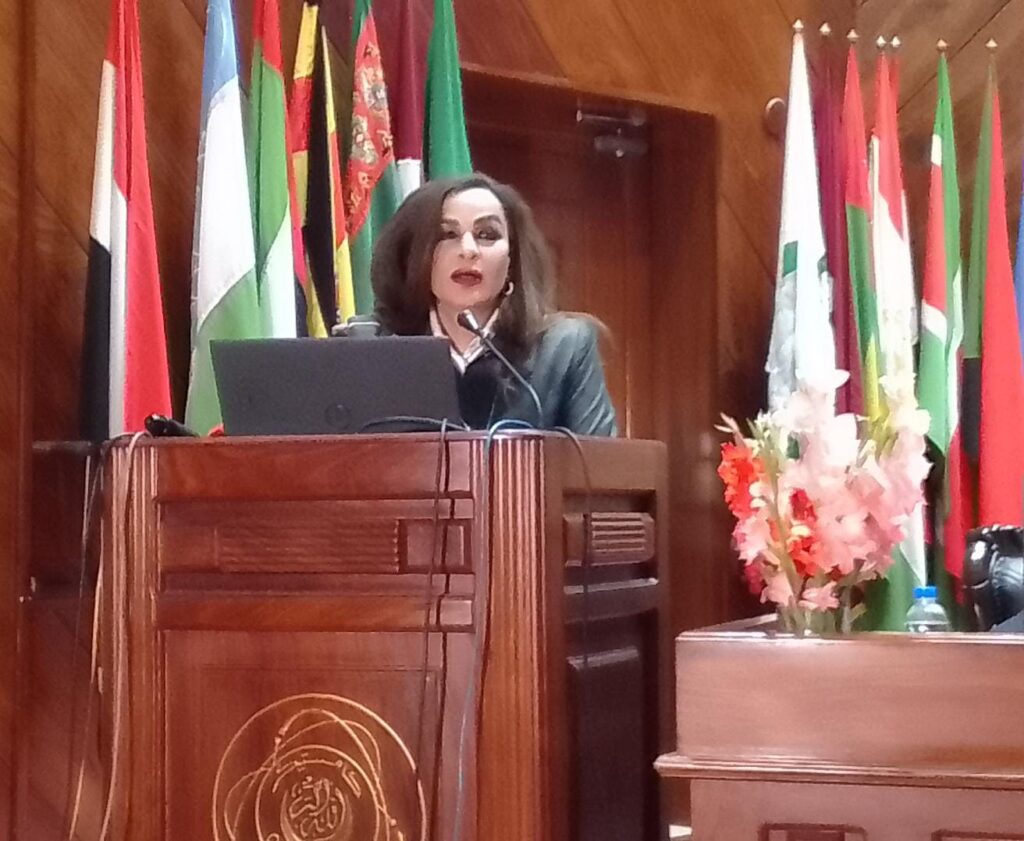
Islamabad : Chairperson of the Senate Standing Committee on Climate Change, Senator Sherry Rehman, delivered a powerful keynote address at the “SDGs for a Better Future” conference held at COMSTECH, organized by Mardan Women University. She underscored the urgent need for women’s empowerment, environmental sustainability, and community-driven action to achieve the Sustainable Development Goals (SDGs) by 2030.
Senator Rehman remarked, “Gender inequality has become a global issue. Women are still excluded from decision-making at all levels—be it marriage, family planning, or healthcare choices.” She noted that while the International Labour Organization (ILO) reports that 48.7% of women worldwide participate in the workforce, they continue to earn less than men for the same work.
Senator Rehman drew attention to the struggles of rural women, who not only manage households but also work in fields without recognition or compensation. “We must move beyond viewing women only as mothers, sisters, or wives. Women are complete individuals who deserve the right to make their own choices,” she asserted.
Citing the harsh realities faced by rural women in Pakistan, she shared, “In Pakistan, 72% of women, especially in rural areas, are responsible for carrying household water, yet their work remains unpaid and unappreciated.” She emphasized that women often bear the brunt of water scarcity, ensuring household and agricultural needs are met despite limited resources.
Senator Rehman reiterated Pakistan’s stark gender disparities, stating, “Pakistan ranks 145th out of 146 countries on the Global Gender Gap Index 2024, with women’s workforce participation at just 22.74%.” She further expressed concern over the education crisis, revealing that “Pakistan has 26 million out-of-school children, with 53% of them being girls. This is a wake-up call for all us.”
Turning to the environmental front, Senator Rehman warned of Pakistan’s impending water crisis, stating, “Pakistan could face severe water scarcity by 2025 which is now, with 60% of the population already lacking access to safe drinking water. Water supply and sewage systems have never been prioritized, despite their critical importance.”
She urged both the government and communities to take responsibility for sustainable development, highlighting that “The World Bank has already flagged the impact of climate change. Pakistan recycles only 1% of its plastic, compared to 9% globally.”
Stressing the economic importance of gender equality, Senator Rehman noted, “If women’s workforce participation equaled men’s, Pakistan’s GDP could increase by 60% by 2025.” She called for stronger legislation to protect women’s rights and ensure gender justice.
Senator Rehman also underscored the vital role of educators and youth in promoting green practices. “We must stop deforestation, adopt alternative energy sources, and reduce plastic consumption. Women, by nature, are more environmentally conscious—they plant trees, not cut them down,” she remarked.
Issuing a stark warning about climate change, she stated, “Rising temperatures and shifting weather cycles threaten our future. No one is coming to save us—we must stand up for our rights.”
Concluding her address, Senator Rehman stressed the need for collective action, stating, “Achieving the SDGs for Pakistan will require $60 billion annually, but where will this funding come from? Governments can only do so much; community and individual efforts are equally crucial.”