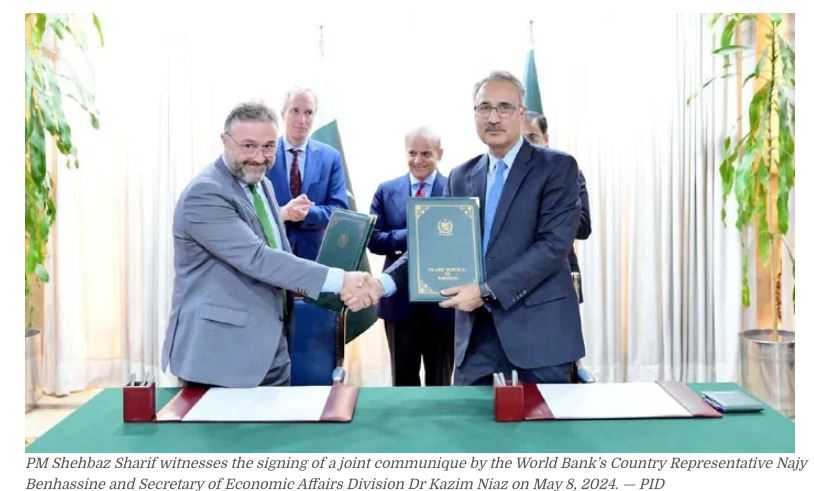
In a recent development, Pakistan and the World Bank (WB) have agreed to collaborate on formulating a Country Partnership Strategy (CPS) framework. This initiative aims to establish medium to long-term relations over a four to ten-year period. The proposed CPS entails granting the Bank the authority to review it every four to five years, as suggested by the WB.
However, the final decision regarding the duration of the CPS will be made during its preparation, which has been delayed due to recent political transitions in Pakistan. Initially planned for the period from FY2022 to FY2026, the CPS has been subject to delays.
The President of the World Bank has advocated for a ten-year CPS for recipient countries. Pakistan’s response to this proposal remains to be seen, with the country expressing interest in a greater share of concessionary lending under IDA resources.
Presently, Pakistan has proposed a $8 billion portfolio for various programs and projects over four years. Should the duration extend to ten years, the size of the CPS framework could potentially reach $20 billion. However, no final decisions have been reached yet.
According to a statement issued by the WB, Martin Raiser, Vice President for South Asia, recently concluded a visit to Pakistan, where discussions centered around stabilizing the economy and fostering inclusive and resilient growth. Raiser met with Prime Minister Muhammad Shehbaz Sharif and key government officials to discuss development priorities, including economic and fiscal reforms, human capital development, climate change adaptation, energy sector reforms, and digitalization.
During his visit, Raiser engaged with various stakeholders, including ministers, development partners, civil society members, and provincial government representatives. Discussions also took place regarding the World Bank’s support in key sectors such as education, water and sanitation, health, rural roads, and livelihoods, particularly in light of climate change challenges.
Raiser also attended the National Education Conference on Out-of-School Children, emphasizing the World Bank’s commitment to addressing this issue and enhancing access to quality education.
Moreover, Raiser visited the Federal Board of Revenue (FBR) Headquarters, where he commended the FBR’s efforts towards digitalized tax administration. He highlighted the potential benefits of these initiatives, particularly in revenue generation, and expressed the World Bank’s interest in strengthening cooperation with the FBR.
Overall, the collaboration between Pakistan and the World Bank aims to foster sustainable development and address various challenges facing the country through strategic partnerships and initiatives.