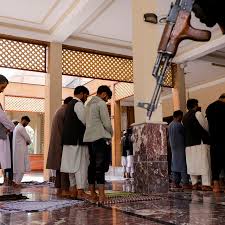
(AN): A gunman stormed a mosque in western Afghanistan, resulting in the tragic death of six individuals, according to a government spokesman. The incident occurred in Herat province’s Guzara district on Monday at approximately 9:00 p.m. local time. While the assailant remains unidentified, locals suspect the minority Shiite community was the target of this heinous act of violence.
Reports indicate that the mosque, located just south of Herat city, served the Shiite minority community. Among the victims were the imam of the mosque and a three-year-old child. Contrary to official statements, eyewitnesses claim that a team of three gunmen orchestrated the attack, with two entering the mosque premises and opening fire on worshippers during prayers.
Although no group has claimed responsibility for the attack, the regional chapter of Daesh (ISIS) poses a significant security threat in Afghanistan, particularly targeting Shiite communities. Despite the Taliban government’s assurances to protect religious and ethnic minorities since assuming power in August 2021, human rights organizations assert that little progress has been made in fulfilling this promise.
The deadliest attack attributed to Daesh since the Taliban regained control occurred in 2022, when a suicide bombing at an education center in Kabul claimed the lives of at least 53 people, mostly girls and young women. While Taliban officials attributed the attack to Daesh, they have consistently downplayed the group’s presence in Afghanistan since the withdrawal of foreign forces.
Although there has been a decrease in Daesh attacks in Afghanistan due to Taliban-led counter-terrorism efforts, according to a United Nations Security Council report released in January, the militant group still maintains a substantial presence and recruitment network in the region. Additionally, Daesh’s ability to project threats beyond Afghanistan, as demonstrated by the March attack on a concert venue in Moscow, underscores the ongoing security challenges posed by the group.
Despite claims of eradicating Daesh from Afghanistan, Taliban authorities continue to face criticism for underreporting security incidents and downplaying the severity of attacks, potentially undermining efforts to address the persistent threat of terrorism in the region.